Torque-Arm II
Shaft-Mount Gear Reducer
Efficient shaft-mount reducer delivering long product life in the most demanding applications
Torque-Arm II (TA II) is designed with a patented harsh-duty sealing system, twin-tapered bushings, and the highest torque rating per case size. It provides maximum reliability with less maintenance to increase operating time and lower your total cost of ownership.
The shaft-mount helical gear reducer mounts directly to the driven shaft. Several accessories are available to produce versatility, cost savings, and long life. A long list of standard features makes TA II a reducer suitable for a wide range of environments right off the shelf.
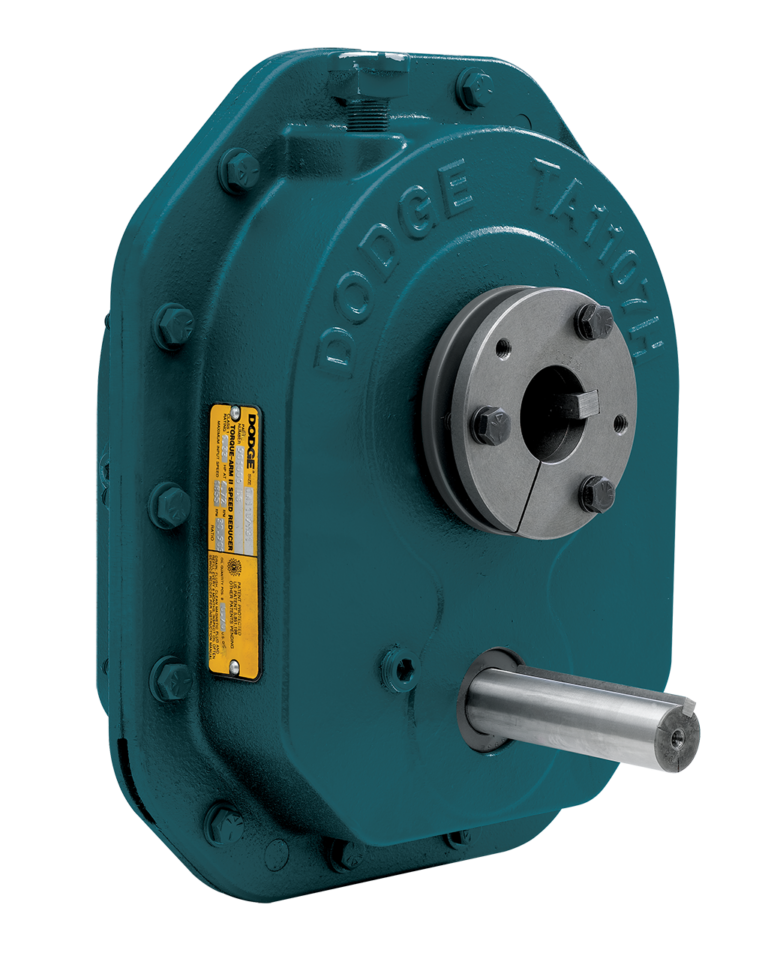
Key features and benefits
Easy to use
- Flexible mounting options to minimize required inventory: shaft mount, flange mount, and screw conveyor drives
- Patented twin-tapered bushing system for easy installation and guaranteed gearbox removal
- Extreme pressure (EP) lubricant-compatible backstop
Availability
- Available in 12 case sizes to support up to 400 hp (300 kW)
- Torque ratings through 500,000 lb-in (56,500 Nm)
- Accommodates shaft sizes up to 7 in (160 mm)
- Warranty for 36 months from date of manufacture or 18 months in service
Resources
Media
Frequently asked questions (FAQs)
What is normal shaft movement and runout on a Torque-Arm reducer?
All driven shafts experience some level of runout, which is a natural condition in rotating equipment, and shaft movement is expected and accounted for in proper system design. On a Torque-Arm reducer, you may notice a small amount of visible movement at the output shaft. This is normal. The reducer is designed to move with shaft runout, which helps reduce internal loads on bearings and gearing and supports longer service life. The torque arm tie rod prevents rotation of the reducer while allowing this controlled movement. If excessive movement, abnormal vibration, or unusual noise is observed, inspect the system for bearing wear or misalignment. Rigid mounting should be avoided, as it can introduce unnecessary strain on the reducer.
How do I install or replace a backstop on a Torque-Arm reducer?
Backstops are precision components and must be installed only in approved mounting positions. If a backstop fails, it cannot be rebuilt in the field and must be replaced as a complete assembly to maintain reliability. During installation, follow the published diagrams exactly. Installing a backstop in the incorrect orientation or reusing worn components can result in failure and allow reverse rotation of the driven load. Following the installation manual step by step ensures proper backstop operation and protects connected equipment.
What oil should I use in a Torque-Arm reducer, and how often should I change it?
Torque-Arm reducers typically use a petroleum-based rust and oxidation (R and O) inhibited gear oil in ISO 220 or ISO 320, selected by ambient temperature and output speed. For low-temperature operation, a synthetic ISO 100 oil is recommended. For high ambient temperatures, use a higher-viscosity synthetic. Extreme-pressure (EP) oils are not required for most applications but may be used with external backstops when properly selected. Fill to the correct oil level plug for your mounting position, or to the highest plug when output speed is below 15 rpm. Change oil every 2,500 hours or 6 months, whichever comes first, with shorter intervals in hot, wet, or dusty environments. Synthetic lubricants and routine oil sampling can extend service intervals.
Does Dodge offer rebuild kits for Torque-Arm reducers?
Yes. Dodge offers rebuild kits for Torque-Arm reducers to support maintenance, extend service life, and restore performance after wear. Genuine Dodge rebuild kits are matched to original specifications, helping ensure proper fit and reliable operation after repair, and they help maintain warranty coverage when installed correctly. Local repair shops cannot guarantee these factors, which is why Dodge recommends sourcing rebuild components directly through authorized channels. To identify the correct kit, the reducer model number from the nameplate is required.
What are the approved mounting positions for Torque-Arm reducers?
Torque-Arm reducers must be installed in catalog-approved mounting positions to ensure proper lubrication of internal gearing and bearings. Installing a reducer in an unapproved position can result in oil starvation, overheating, leakage, or premature wear. Certain approved mounting positions intentionally flood the input shaft area with oil by design, and they function correctly only when the reducer is installed exactly as shown in the diagrams. For incline mounting or configurations not shown in the manual, contact Dodge Application Engineering to confirm the correct oil fill level. Always verify the mounting position chart before installation.


Product Search
Access from US
Access from Canada
Access from Mexico
Access Globally
