Mechanical Drives, Couplings, & Conveyor Components
A worldwide reputation for reliability and quality
Whether you are looking for mechanical drive components, couplings, or conveyor components, Dodge products maximize uptime in any application—allowing customers to meet their growing demands.
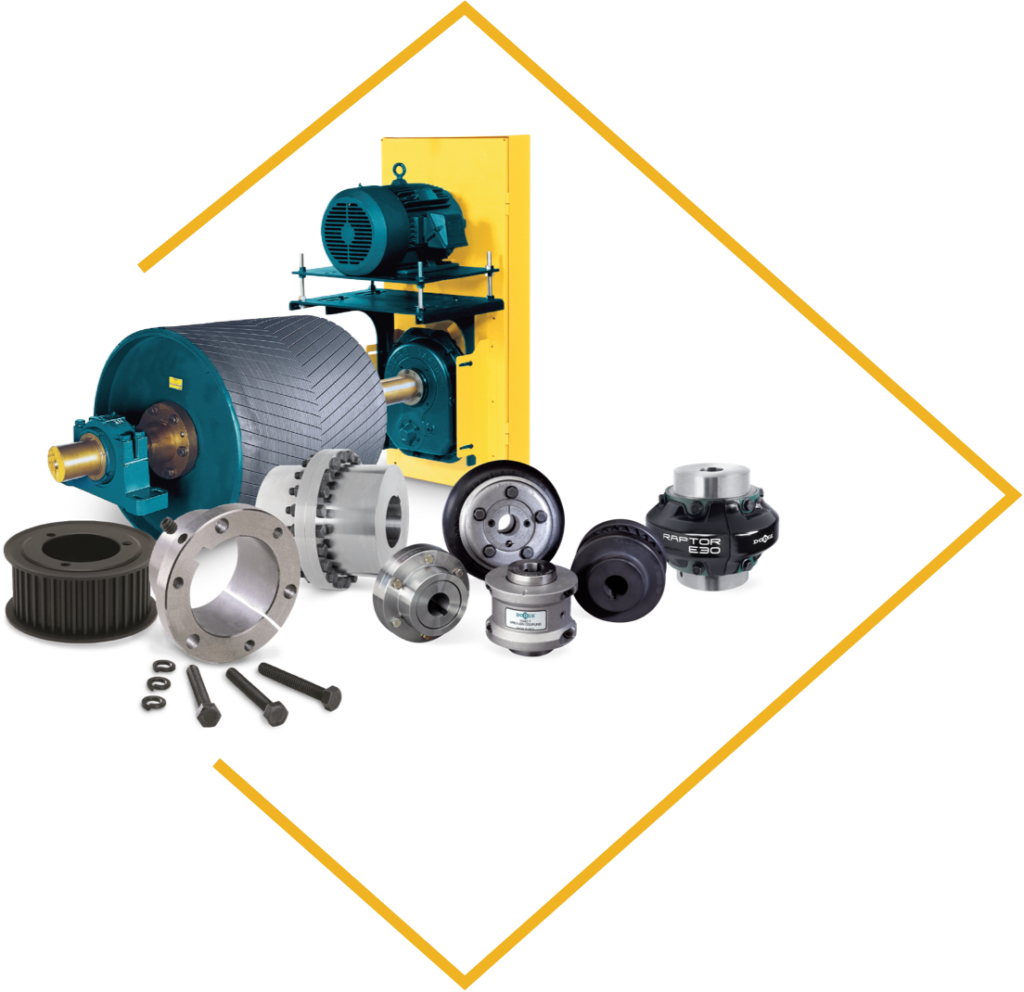
Our offerings
Mechanical drive components
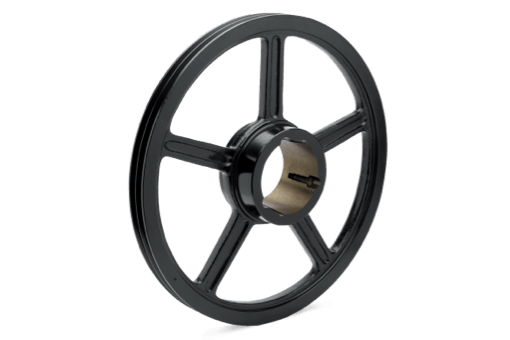
V-Belt Sheaves
Dodge v-drive sheaves are manufactured to ISO 9002 quality standards with precision machining that meets or exceeds joint RMA/MPTA industry standards for smooth operation and extended belt life. This design provides low economic costs per horsepower transmitted due to shock load and vibration isolation, creating clean, quiet operation.
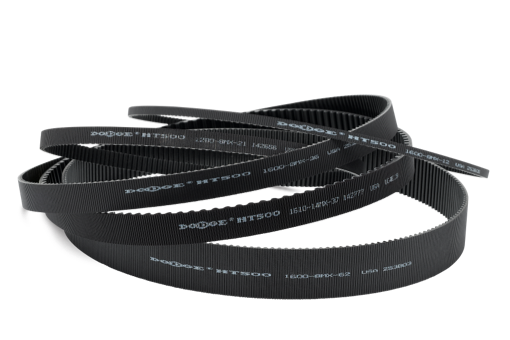
V-Belts
V-belts allow for compact, lighter-weight drives and feature a high-strength tension member for rated power with minimum stretch. Their molded cog construction accommodates extended belt lengths. S-L classic, classic cog, polyband, and wedge v-belts are also available.
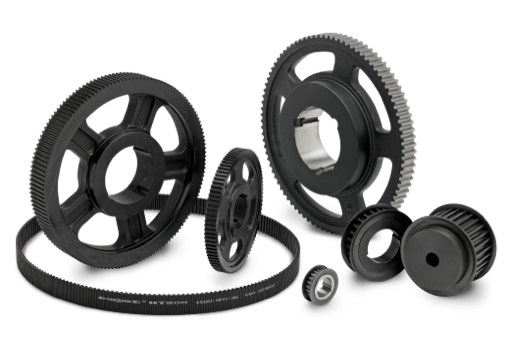
Synchronous Sprockets and Belts
Synchronous sprockets improve drives with a curvilinear timing belt. A reinforced belt wraps around and engages a motor-driven sprocket or pulley to transmit translational or rotational motion.
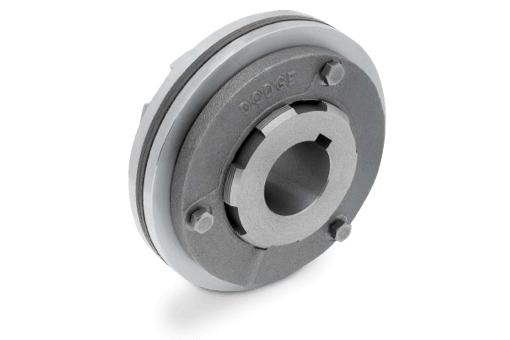
Roller Chain Sprockets
Roller chain sprockets reliably handle high shock loads and deliver large amounts of torque. For ease of installation and removal, Dodge offers roller chain sprockets featuring Taper-Lock bushings. Dodge also offers Torque-Tamer clutches, an overload protection device for roller-chain drives that protects the system’s driven equipment.
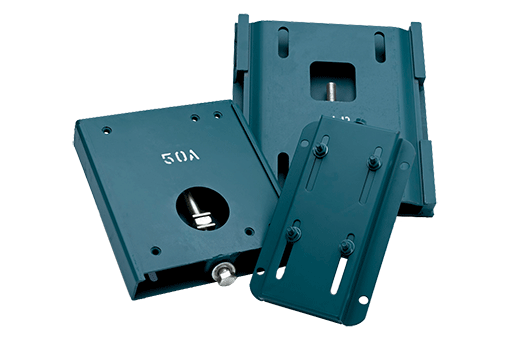
Motor Bases
Motor bases are made of steel, which offers a base of rugged design while being compact and smooth in appearance. Bases are designed to provide adequate travel and are fully adjustable by the use of a single adjusting screw and the elongated mounting holes in the base plate.
Couplings
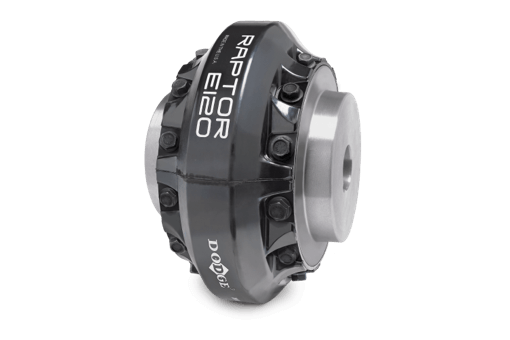
Elastomeric Couplings
Dodge elastomeric couplings are available in innovative designs such as the Raptor (split-tire), Para-Flex (tire), D-Flex (sleeve), and StarFlex (jaw). This large product offering delivers coupling solutions for virtually any application including pumps, compressors, and fans.
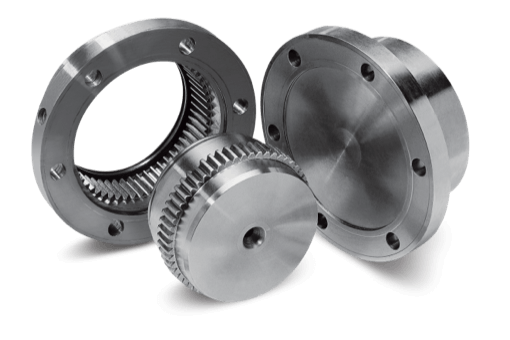
Metallic Couplings
Dodge metallic couplings are available in flexible designs such as grid, gear, and chain, as well as rigid designs such as Taper-Lock rigid, ribbed-rigid, and moment couplings. This broad offering delivers solutions across the torque spectrum, from pumping applications to packaging, with Dodge enclosed gearing for high-torque conveying applications.
Mechanical Soft Starts
Dodge fluid couplings are most commonly used on remote location conveyor drive applications in the mining, aggregate, cement, and power generation industries where controls and drives are difficult to power, program, and maintain.Synchronous sprockets improve drives with a curvilinear timing belt. A reinforced belt wraps around and engages a motor-driven sprocket or pulley to transmit translational or rotational motion.
Conveyor Components
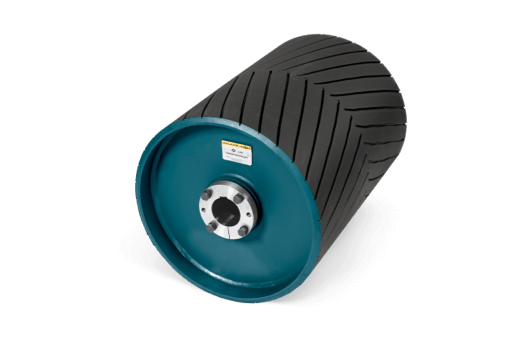
Drum Pulleys
Dodge heavy-duty and mine-duty extra (MDX) drum pulleys deliver high performance and are available when you need them. Available from stock in many common sizes or custom-made, Dodge heavy-duty drum pulleys meet or exceed CEMA application standards for use with conveyor belts rated up to 750 PIW (Pounds per Inch of Belt Width) by 131 kN/m.
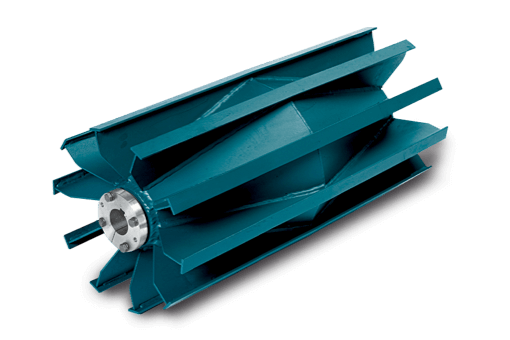
Wing Pulleys
Dodge wing pulleys deliver high performance and are available from stock in many common sizes. Dodge wing pulleys meet or exceed CEMA application standards for use with conveyor belts rated up to 450 PIW by 78 kN/m.
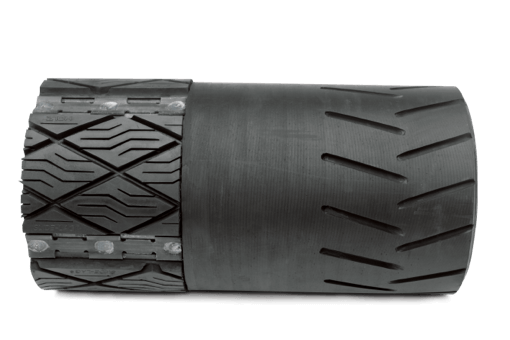
Lagging
Dodge conveyor pulleys can be provided with high-quality lagging, designed to ensure maximum belt and pulley life in tough applications. Dodge has the expertise to offer a full variety of lagging options, including vulcanized, cold-bond, and weld-on lagging.
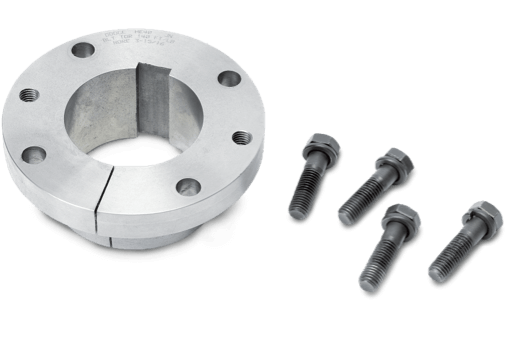
Bushings and Hubs
Dodge bushings have unique features and a high-endurance design that extend conveyor pulley life. Dodge also manufactures XT bushings, which are interchangeable with bushings found on competitive conveyor pulley products. Hubs are useful for welding into fan rotors, impellers, and agitators which require secure mounting to the shaft.
Frequently asked questions (FAQs)
Synchronous drives
What are the benefits of synchronous drives?
Synchronous drives eliminate belt slip to maintain exact speed ratios between shafts, making them essential for precision applications. Their tooth design transmits higher torque in compact spaces, supporting tight installations where traditional belt systems fall short. The result is more reliable power transfer, reduced maintenance, and greater system efficiency across demanding industrial environments.
How much misalignment can synchronous belts handle?
Synchronous belts are sensitive to misalignment, so staying within recommended tolerances is critical. Angular misalignment should not exceed 0.5 degrees, and parallel misalignment should be kept below 0.020 inches per foot of span. Exceeding these limits leads to premature wear, increased noise, and potential belt failure.
How do I select the correct belt width?
Belt width selection depends on the horsepower being transmitted, operating speed, and the application’s service factor. Dodge provides sizing tools and selection charts through the product catalog and PT Wizard to simplify this process. Reference the catalog’s horsepower rating tables or use PT Wizard for a guided selection tailored to your specific drive requirements.
What is the service life of synchronous belts?
With proper installation and maintenance, synchronous belts typically last between 15,000 and 20,000 hours. Achieving this lifespan requires correct belt tension, proper alignment, and a clean drive environment free of contaminants. Regular inspections help catch developing issues before they cause failure, extending belt life and protecting uptime.
What do I need to convert a V-belt drive to a synchronous drive?
To convert a V-belt drive to a synchronous drive, gather the following application details:
- Center distance
- Service factor
- Driver speed
- Driven speed
- Shaft sizes
- Horsepower
Synchronous drives can improve system efficiency by two to five percent, reduce maintenance requirements, and enhance overall performance.
Bushings and keyless locking
What should I know before installing a QD bushing?
QD bushing installation requires careful attention to shaft and bore tolerances, correct component alignment, and fasteners tightened in the specified sequence and to the correct torque. These factors directly affect shaft engagement and long-term performance. Because installation steps vary by bushing size and configuration, always follow the QD bushing installation manual for the complete mounting procedure, torque values, and retorque guidance.
Where do I find torque specifications for QD bushings?
Torque specifications for QD bushings vary by size and application and should always be sourced from the QD bushing installation manual. The manual provides torque charts organized by bushing size, along with the required tightening sequence and retorque guidance. Using correct torque values is essential for proper installation and preventing damage from over-tightening.
How do I remove a QD bushing?
To remove a QD bushing, insert removal bolts into the designated jacking holes and tighten them evenly in a controlled sequence. This gradually pushes the bushing out of the hub without damaging components. Avoid hammering the flanges, as this can damage the bushing, hub, and surrounding equipment. Refer to the installation manual for size-specific removal instructions.
What advantages do keyless locking devices offer?
Keyless locking devices (KLDs) provide full shaft contact, allow for infinite axial positioning, and enable faster installation compared to traditional keyed solutions. They also help reduce fretting corrosion, extending the service life of both the shaft and the mounted component. For applications requiring precise positioning and repeatable performance, KLDs offer a reliable, maintenance-friendly alternative.
What shaft preparation is needed before installing a keyless locking device?
Before installing a keyless locking device (KLD), the shaft surface must be clean, smooth, and free of burrs, oil, rust, and other contaminants. A surface finish of 63 RMS or better is required to ensure optimal contact and performance. Proper shaft preparation is one of the most important steps in achieving a secure, long-lasting KLD installation.
Sheaves
What types of sheaves does Dodge offer?
Dodge offers a comprehensive range of sheaves including classical (A, B, C), narrow (3V, 5V, 8V), split-taper (B5V), fractional horsepower V-belt, and variable pitch sheaves, as well as synchronous sprockets. Standard interface options include QD bushings and Taper-Lock® designs, enabling direct interchangeability across most industry applications.
How do I select the correct sheave diameter?
Sheave diameter directly affects belt speed and bending stress, making proper selection critical for belt life and drive performance. Reference the horsepower rating tables in the Dodge product catalog to identify the correct diameter for your application. Minimum recommended pitch diameters are listed for each belt section to prevent overloading and premature wear.
Can Dodge sheaves be bored to size?
Yes, many Dodge sheaves are available bore-to-size or with removable bushings, giving you flexibility to match specific shaft diameters and keyway requirements. Bore-to-size sheaves can be precision-machined to your application’s needs. Contact Dodge or your authorized distributor to confirm bore availability by product series.
How much runout is acceptable in sheaves?
Sheaves should be within 0.005 in. total indicator reading (TIR) per inch of diameter to maintain proper balance and belt tracking. Excessive runout causes vibration and accelerated belt wear. Verify runout at installation using a dial indicator and correct any deviation before placing the drive in service.
Are Dodge sheaves interchangeable with other manufacturers' products?
Yes, Dodge sheaves conform to ANSI and ARPM industry standards, ensuring interchangeability for groove profiles and bushing types with other standards-compliant manufacturers’ products. Always confirm dimensions such as groove angle, outside diameter, and hub length to verify proper fit, alignment, and belt performance before placing the drive in service.
Sprockets and roller chain
What chain sprocket types does Dodge manufacture?
Dodge manufactures single and double roller chain sprockets in a variety of styles, including taper-bushed, finished-bore, and split configurations. Pitch sizes range from ANSI No. 35 to No. 240, supporting a wide range of industrial drive applications from light conveying to heavy-duty power transmission.
How do I determine roller chain sprocket wear?
Inspect sprocket teeth for hooking, a leaning tooth profile that develops as chain elongation advances. Chains riding high in the sprocket grooves are another sign of wear. Replace sprockets when teeth show visible hooking or when roller chain elongation exceeds 3 percent as measured over a defined span. Running a new chain on a worn sprocket accelerates wear on both components.
What lubrication is required for roller chain drives?
Roller chains require continuous or periodic lubrication to achieve full service life. Dodge recommends SAE 30 non-detergent oil applied at the pitch line between the inner plates and rollers. Proper lubrication can extend chain life by up to three times compared to dry operation, making it one of the highest-impact maintenance practices for roller chain drives.
Can roller chains be shortened or lengthened in the field?
Yes, chains can be adjusted in the field using offset links and connecting links. However, offset links reduce chain strength by about 20 percent, so their use should be minimized in heavy-duty or high-torque applications where full chain capacity is required.
How do I calculate chain length for a given center distance?
Chain length in pitches can be calculated using the formula below. N1 and N2 represent the number of teeth on the small and large sprocket, C is the center distance in inches, and p is the chain pitch in inches. Round the result up to the nearest even number of pitches for easier connecting link installation.


Product Search
Find the specific Dodge product you’re looking for.

CAD Drawings
Reference detailed drawings of our Dodge products for your layout and design needs.